Building a Production RAG Pipeline That Doesn't Hallucinate
A practical walkthrough of the retrieval, chunking, and grounding choices that separate a demo RAG app from one you can ship.


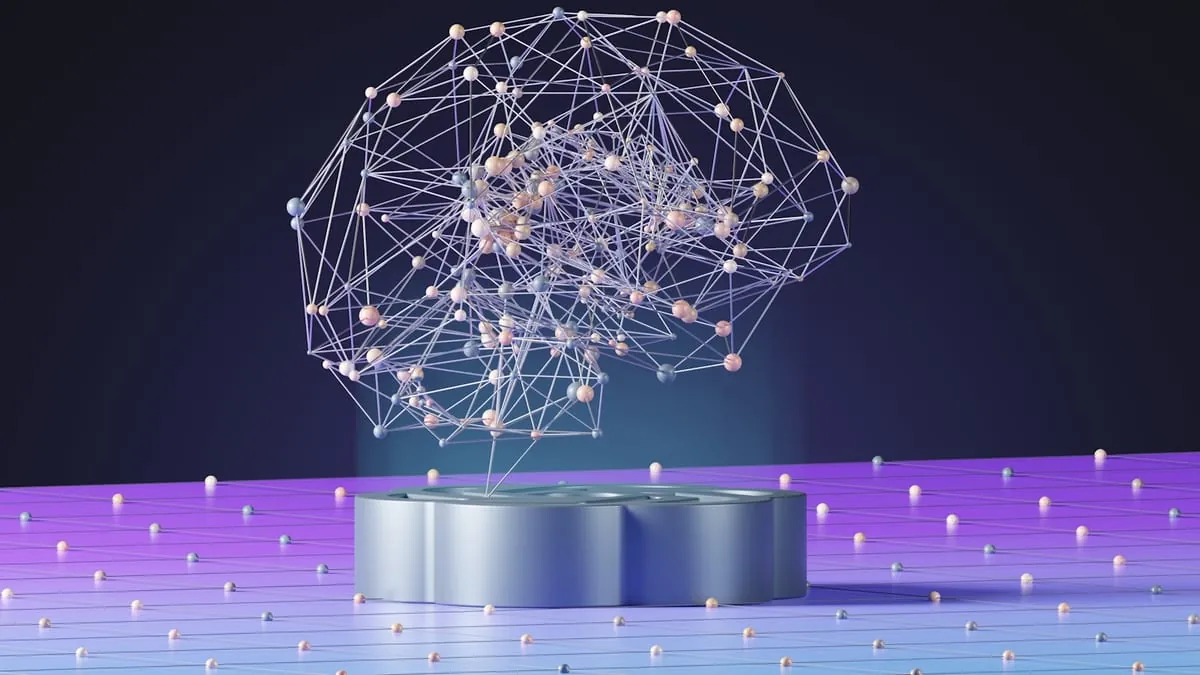
Retrieval-Augmented Generation (RAG) looks trivial in a notebook and painful in production. The gap is almost never the model — it’s everything around the model: how you chunk, retrieve, rank, and ground the answer.
Here’s the pipeline I actually ship, and the decisions that matter.
The core problem
An LLM hallucinates when it answers from parametric memory instead of your data. RAG fixes this by putting the right context in front of the model at inference time. But “the right context” is doing a lot of work in that sentence.
If retrieval returns the wrong chunks, a better model just writes a more convincing wrong answer.
1. Chunking is a retrieval decision, not a preprocessing step
Most teams chunk by a fixed token count and move on. That destroys meaning across boundaries. Instead:
- Split on semantic structure (headings, paragraphs) first.
- Keep chunks in the 300–600 token range for dense docs.
- Store a small overlap (10–15%) so answers spanning a boundary survive.
2. Retrieve more, then re-rank
Vector search alone is noisy. The pattern that works:
# 1. Over-retrieve with vector search
candidates = vector_store.search(query, k=20)

# 2. Re-rank with a cross-encoder for precision
ranked = reranker.rank(query, candidates)
context = ranked[:5]  # keep only the best
Over-retrieving then re-ranking consistently beats a single k=5 vector search, because the embedding model optimizes for recall, not final relevance.
3. Ground the answer explicitly
Tell the model, in the system prompt, to answer only from the provided context and to say when it can’t:
- Pass the retrieved chunks with clear source markers.
- Ask for inline citations back to those sources.
- Add a refusal path: “If the context doesn’t contain the answer, say so.”
This one change removes most confident-but-wrong answers.
What actually moved the needle
In order of impact: re-ranking > chunking strategy > prompt grounding > model choice. Teams obsess over the last one and ignore the first three.
Ship the boring parts well and RAG stops hallucinating.

AI Engineer · Full-Stack Developer · GenAI/ML. Writing about building with AI.
Full profile →Read next
AI Agent Memory: What to Store, What to Forget, and Why the Write Path Matters
Agent memory is a real discipline now. The four types, why retrieval is the easy half, and how a naive memory system quietly poisons its own context.
Context Rot: Why Your LLM Gets Worse the More You Give It
More tokens in, worse output out — even well inside the context window. What context rot is, how it differs from lost-in-the-middle, and how to fix it.
What Is MCP? The Model Context Protocol Explained for Developers
MCP is the USB-C port for AI tools — one protocol instead of one integration per app. How it works, what a server exposes, and where it still hurts.